
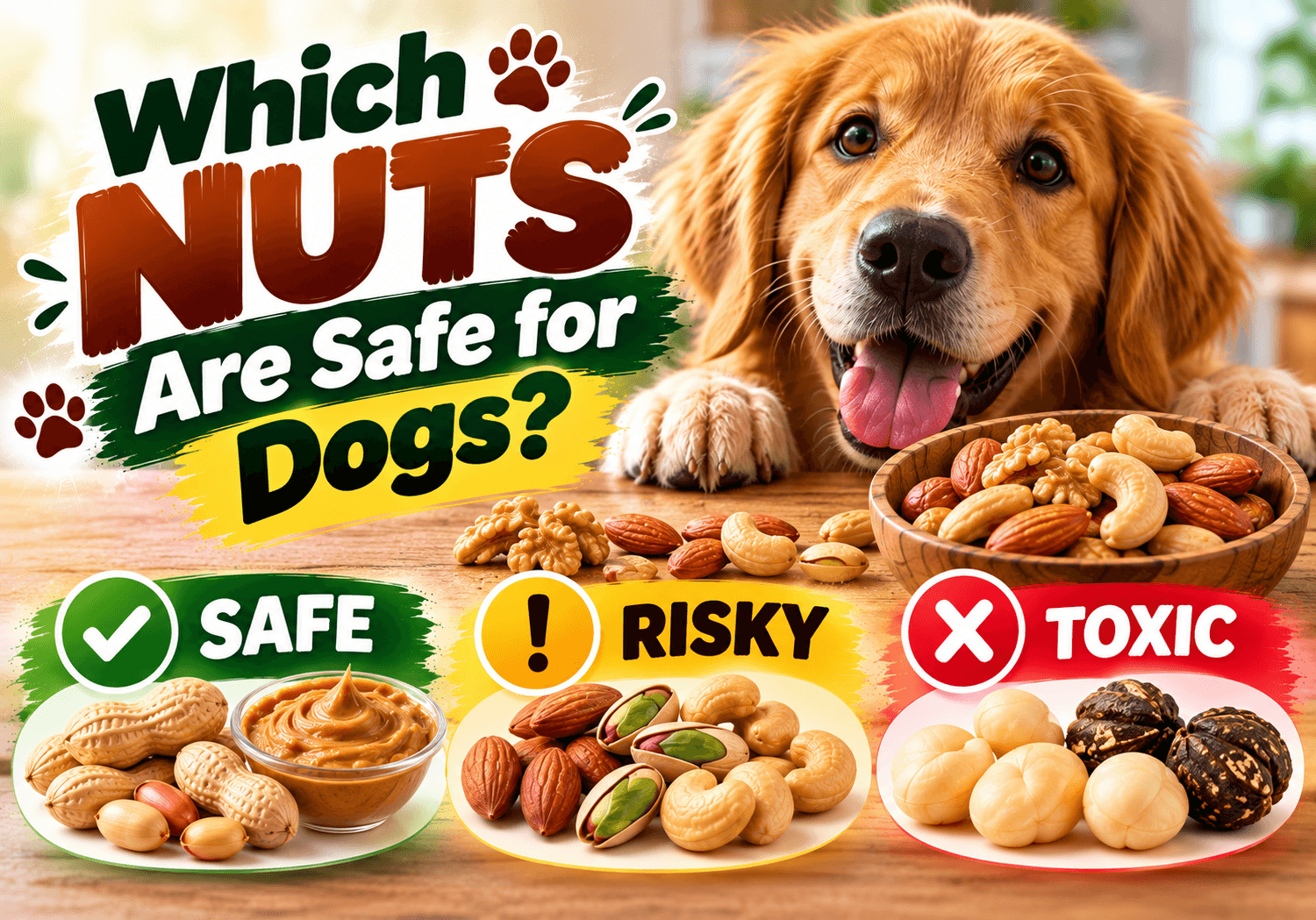
Your dog stares up at you while you snack on a handful of nuts, and you wonder: can I share just one? Some nuts are fine as an occasional treat. Others can make dogs genuinely sick, and a few common nut products hide ingredients that are dangerous for dogs. So, which nuts are safe for dogs, and which ones should never reach your dog’s bowl?
This guide sorts every common nut into three groups: safe in small amounts, risky, and toxic. It explains the real dangers (macadamia toxicity, xylitol in nut butters, moldy nuts, choking, and pancreatitis from high-fat foods), how many nuts a dog can safely have, and what to do if your dog eats something it shouldn’t.
Key Takeaways
- No nut is essential for dogs. A complete, balanced dog food covers their needs. Nuts are optional treats at best.
- Safest choices, in tiny amounts: plain, unsalted peanuts and xylitol-free peanut butter. Plain, roasted cashews are also acceptable occasionally.
- Toxic, never feed: macadamia nuts. Signs have occurred at about 2.4 g per kg of body weight.
- Also avoid: moldy nuts of any kind, including old walnuts, which can carry tremor-causing toxins, plus black walnuts, horse chestnuts (buckeyes), and acorns.
- Risky because of fat, size, or mold: pistachios, pecans, almonds, Brazil nuts, hazelnuts, and pine nuts.
- Always check nut butters for xylitol, which can cause a dangerous blood sugar drop within 10 to 60 minutes.
- Treats should be no more than 10% of your dog’s daily calories.
Can Dogs Eat Nuts? The Short Answer
Some, in small amounts, and only plain. Dogs don’t need nuts. Their nutrition should come from a complete and balanced dog food. Nuts can be an occasional treat, but they come with real risks:
- They’re very high in fat. High-fat foods and treats can trigger stomach upset and, in some dogs, pancreatitis.
- They’re small and hard. Whole nuts can be a choking hazard or cause blockages, especially in small dogs.
- Some are toxic. Macadamia nuts cause poisoning in dogs, and moldy nuts can carry dangerous toxins.
- Human nut products often contain harmful extras: salt, seasonings (garlic and onion powder), chocolate, sugar, or xylitol.
The UC Davis School of Veterinary Medicine advises that treats and extra food should not exceed 10% of a dog’s daily calories. It specifically lists macadamia nuts among the foods to avoid.
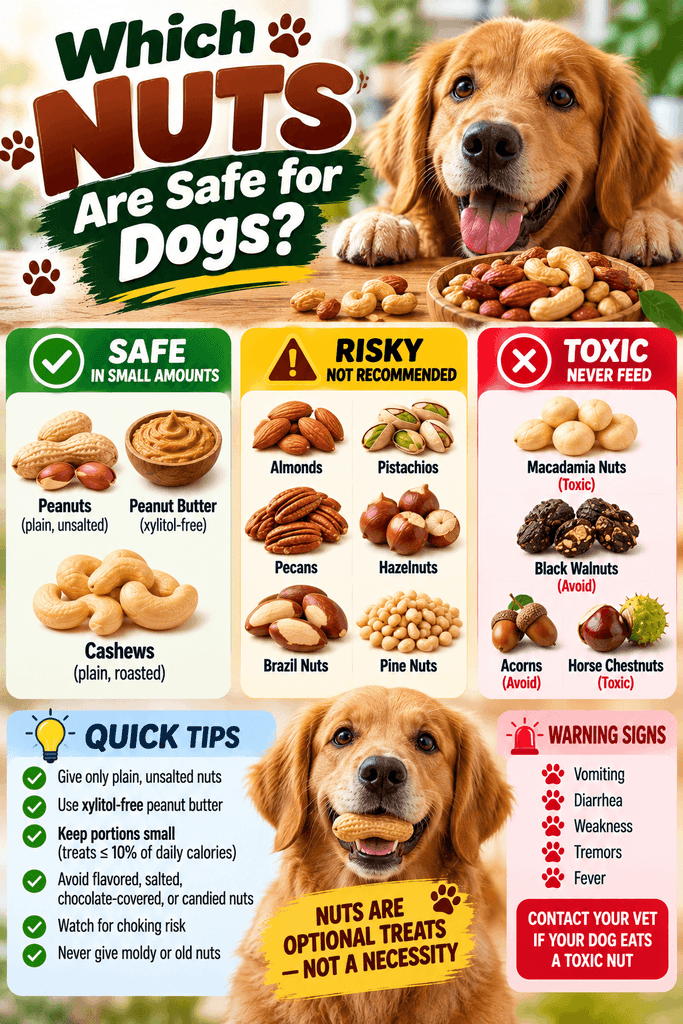
Which Nuts Are Safe for Dogs? Quick Reference Chart
| Nut | Safe for dogs? | Main concern |
| Peanuts (plain, unsalted) | ✅ Safe in small amounts | Fat, salt, allergies (rare) |
| Peanut butter (xylitol-free) | ✅ Safe in small amounts | Xylitol, fat, added salt/sugar |
| Cashews (plain, roasted) | ⚠️ Occasionally, a few | High fat, cost, choking |
| Almonds | ⚠️ Not recommended | Choking/blockage, fat, hard to digest |
| Pistachios | ⚠️ Not recommended | Fat, shells, mold risk |
| Pecans | ⚠️ Not recommended | Fat, mold risk |
| Hazelnuts | ⚠️ Not recommended | Choking size, fat |
| Brazil nuts | ⚠️ Not recommended | Very high fat, large size |
| Pine nuts | ⚠️ Not recommended | Fat. Often sold in pesto with garlic |
| Walnuts (English) | ⚠️ Avoid. Never if old or moldy | Mold toxins, fat |
| Black walnuts | ❌ Avoid | Mold toxins, hulls |
| Macadamia nuts | ❌ Toxic | Weakness, tremors, vomiting, fever |
| Horse chestnuts / buckeyes | ❌ Toxic | Not true chestnuts. Poisonous seeds |
| Acorns | ❌ Avoid | Tannins, blockage |
| Chocolate-covered, salted, seasoned, or candied nuts | ❌ Avoid | Chocolate, salt, garlic/onion, sugar |
The Safest Nuts for Dogs
Peanuts: the best option
Plain, unsalted peanuts, either dry-roasted or boiled, are the safest nut-type treat for most dogs. Peanuts are technically legumes. They provide protein and unsaturated fat, but they’re still high in calories, so use only a few at a time. Skip:
- Salted, honey-roasted, or flavored peanuts
- Peanuts in the shell for small dogs, since shells can cause choking or blockage
- Any peanuts that look or smell moldy
Peanut butter: safe only without xylitol
Peanut butter is a favorite for hiding pills and filling puzzle toys, and plain peanut butter is fine in small amounts. The danger is xylitol, a sugar substitute that some nut butters contain.
The FDA warns that in dogs, xylitol triggers a powerful insulin release. That can cause a rapid, profound drop in blood sugar within 10 to 60 minutes. Signs include:
- Vomiting
- Weakness and staggering
- Collapse
- Seizures
The FDA specifically lists “some peanut and nut butters” among the products that may contain xylitol. Its advice is to always check the ingredient label before sharing. Choose peanut butter that contains only peanuts, or peanuts and a little salt.
Cashews: occasionally, in tiny amounts
Plain roasted cashews aren’t toxic to dogs. A cashew or two as a rare treat is generally fine for a healthy, medium or large dog. Cashews are high in fat, though, so they’re not an everyday snack. Never give cashews that are salted, seasoned, or part of a trail mix. Cashews sold in stores have already been heat-treated to remove a caustic shell oil, so never let your dog chew on raw cashews still in the shell.
Nuts That Are Risky for Dogs
These nuts aren’t classically “poisonous,” but their risks usually outweigh any benefit.
Almonds
Almonds aren’t toxic, but they’re hard, irregularly shaped, and difficult for dogs to chew and digest. Dogs often swallow treats whole, so almonds can cause choking or blockages, especially in small dogs. They’re also high in fat. Salted and flavored almonds add sodium and seasonings. Best to skip.
Pistachios
Pistachios are high in fat, and their shells can cause choking or obstruction. Like other nuts, they can carry mold if stored poorly. Most commercial pistachios are also salted. Not recommended.
Pecans
Pecans are among the highest-fat nuts, at about 20 g of fat per ounce. Like walnuts, fallen or stored pecans can grow mold. Keep them away from your dog, and supervise dogs in yards with pecan trees.
Brazil nuts, hazelnuts, and pine nuts
- Brazil nuts are very large and high in fat, a choking and pancreatitis risk.
- Hazelnuts are about the size of a small dog’s airway, so they’re a choking hazard.
- Pine nuts are less of a choking risk, but they’re high in fat. They often appear in pesto, which usually contains garlic. Keep pesto away from dogs.
Why fat matters: pancreatitis
Pancreatitis is a painful inflammation of the pancreas. According to Texas A&M’s College of Veterinary Medicine, its triggers include high-fat diets and fatty treats, especially table scraps. Signs include vomiting, poor appetite, lethargy, abdominal pain, and diarrhea. Miniature schnauzers and Yorkshire terriers are genetically predisposed. A Texas A&M veterinary nutritionist warns that excess fat can cause diarrhea or, in severe cases, pancreatitis. A large handful of nuts can be exactly that kind of fatty treat.
Even for a skinny dog, high-fat foods won’t help a dog gain weight the healthy way. A vet-guided plan built on quality dog food works better than piling on fatty snacks.
Which Nuts Are Toxic to Dogs?
Macadamia nuts: toxic, never feed
Macadamia nuts are the classic toxic nut for dogs. A study in Veterinary and Human Toxicology described weakness, tremors, and depression in dogs after eating them. According to the MSD Veterinary Manual:
- Dose: signs have occurred at doses as low as about 2.4 g per kg of body weight. For a 10-kg (22-lb) dog, that’s roughly 24 g, or about 1 ounce, of nuts.
- Signs: vomiting, wobbliness (ataxia), weakness, especially in the hind legs, fever (hyperthermia), depression, and tremors.
- Timing: signs usually appear within 12 hours and typically resolve within 12 to 48 hours.
- Cause: the mechanism of toxicity isn’t known.
Macadamia poisoning is usually not fatal, and most dogs recover with supportive care. Even so, it’s distressing and often requires a vet visit. Danger rises when macadamias come in chocolate-covered form or in cookies with chocolate, because chocolate is toxic to dogs too. UC Davis lists both macadamia nuts and chocolate among foods to avoid.
Moldy nuts, especially walnuts: tremor risk
Nuts that have fallen from trees or been stored too long can grow molds that produce tremorgenic mycotoxins, toxins that cause muscle tremors. In a case reported in the New Zealand Veterinary Journal [VERIFY DOI], a 1-year-old Labrador-cross developed tremors, staggering, drooling, and fever after eating walnuts that had lain on the ground for about five months. Tremorgenic mycotoxins were detected in walnuts from the dog’s environment. The dog recovered within 18 hours with veterinary treatment.
Similar poisonings have been reported in dogs that ate other moldy foods. A study in the Journal of the South African Veterinary Association linked the mold toxin penitrem A in moldy rice to vomiting, tremors, and seizures in two dogs.
Practical lesson: keep dogs away from fallen walnuts and pecans under trees. Never give dogs old, discolored, or moldy nuts, and secure compost bins.
Black walnuts
Black walnut trees drop large green-hulled nuts that mold easily. Because of the mold risk and their tough hulls and shells, black walnuts should be kept away from dogs entirely.
Aflatoxin: an invisible risk in moldy peanuts and grains
Aflatoxins are toxins made by the mold Aspergillus flavus. The FDA explains that crops such as corn and peanuts can carry this mold, and the toxins may be present even when you can’t see any mold. Aflatoxins can cause liver damage, which can be fatal. Signs include:
- Sluggishness and poor appetite
- Vomiting and diarrhea
- Yellowing of the eyes, gums, or skin
- Unexplained bruising
There is no antidote. Only share fresh, human-grade peanuts or peanut butter, and throw out anything that smells or looks off.
Horse chestnuts (buckeyes)
Horse chestnuts, also called buckeyes or conkers, aren’t related to edible sweet chestnuts. Cornell University notes that trees in the Aesculus genus contain the toxins aesculin and fraxin. In animals, these cause vomiting, abdominal pain, muscle twitching, and weakness. The NIH’s NCCIH likewise states that raw horse chestnut seeds are unsafe to eat. Keep dogs away from fallen buckeyes during autumn walks.
Acorns
Acorns contain tannins. Cornell notes that tannins in oak buds, leaves, and acorns can poison grazing animals. For dogs, the more common problems are stomach upset and the risk of blockage from swallowing acorns or their caps. Discourage acorn chewing on walks.
How Many Nuts Can a Dog Have?
If you choose to share a safe nut, keep it small:
- Follow the 10% rule. Treats and extras should make up no more than 10% of your dog’s daily calories, according to UC Davis.
- Know the calories. A single peanut has about 6 calories, a cashew about 9, and a teaspoon of peanut butter about 30. These are estimates from USDA data for peanuts and cashews.
- Example: for a dog eating 300 calories a day, the whole day’s treat allowance is about 30 calories. That’s roughly five peanuts or one teaspoon of peanut butter, not both, and not on top of other treats.
- Size matters. For small dogs, chop or crush nuts to reduce choking risk, or skip them altogether.
- Start small. Try one nut and watch for vomiting, diarrhea, or itching. Food allergies are possible.
Your veterinarian can tell you your dog’s daily calorie needs and whether nuts suit dogs with conditions such as pancreatitis, obesity, or kidney disease.
What to Do if Your Dog Eats Nuts
- Identify what and how much. Was it macadamias, chocolate-covered nuts, a nut butter with xylitol, or moldy nuts? Estimate the amount and note the time.
- Check the label of any nut butter or snack for xylitol, chocolate, garlic, onion, or heavy salt.
- Call your veterinarian, an emergency animal hospital, or an animal poison control center right away if your dog ate macadamias, anything with xylitol or chocolate, moldy nuts, buckeyes, or a large amount of any nut. The FDA advises going to the vet immediately after xylitol ingestion, even before symptoms appear.
- Don’t induce vomiting at home unless a veterinarian tells you to.
- Watch for warning signs: vomiting, weakness, wobbliness, tremors, fever, belly pain, lethargy, collapse, seizures, or yellowing of the gums or eyes.
- Get your dog to the car carefully. Macadamia poisoning often causes hind-leg weakness, so a wobbly dog may not be able to jump in. Learn how to lift and carry your dog safely to avoid injuring their back or yours.
- Bring the packaging to the vet if you can.
Animal poison control lines in the U.S. include the ASPCA Animal Poison Control Center, (888) 426-4435, and the Pet Poison Helpline, (855) 764-7661. A consultation fee may apply.
Healthier Treat Alternatives to Nuts
UC Davis notes that many fruits and vegetables are good, low-fat treat options for dogs, including:
- Carrots and green beans
- Apple slices (no seeds or core)
- Watermelon (no seeds or rind)
- Bananas and pears in small pieces
- Cooked plain squash
- Plain, air-popped popcorn
Avoid grapes, raisins, onions, garlic, and chocolate, which are harmful to dogs.
Not every reward has to be food. Many dogs value play just as much as a snack. A game of fetch, or an automatic dog ball thrower for high-energy dogs, rewards good behavior with zero calories.
Myths vs. Facts
| Myth | Fact |
| All nuts are poisonous to dogs. | Plain peanuts and xylitol-free peanut butter are safe in small amounts. Macadamias are the main toxic nut. |
| If peanuts are safe, all peanut butter is safe. | Some nut butters contain xylitol, which can cause dangerous low blood sugar in dogs. |
| A few macadamia nuts won’t hurt a dog. | Signs have occurred at about 2.4 g/kg. Even a small handful can sicken a small dog. |
| Almonds are toxic to dogs. | Almonds aren’t classically toxic, but they’re a choking, blockage, and fat risk. |
| Nuts are a healthy protein treat for dogs. | Dogs get protein from their food. Nuts mainly add fat and calories. |
| Old walnuts from the yard are just like store-bought ones. | Fallen, moldy walnuts can carry tremor-causing toxins. |
How Nuts Fit Into a Dog’s Healthy Lifestyle
The healthiest approach is simple. Feed a complete and balanced dog food, keep treats under 10% of daily calories, and choose low-fat treats most of the time. Pair a sensible diet with regular exercise to keep your dog at a healthy weight and burn off the occasional extra treat. If you share nuts, stick to a few plain, unsalted peanuts or a dab of xylitol-free peanut butter. Keep macadamias, chocolate-covered nuts, trail mixes, and moldy or fallen nuts well out of reach.
Store your own snacks in closed containers, and teach family members and guests not to share nuts with your dog. If your dog is a determined counter-surfer or bag-raider, a sturdy crate keeps them safe from dropped snacks when you can’t supervise.
Frequently Asked Questions
Can dogs eat peanuts?
Yes, in small amounts. Plain, unsalted, shelled peanuts are the safest nut for dogs. Avoid salted, honey-roasted, or flavored peanuts, and skip shells for small dogs because of choking risk. Peanuts are high in fat and calories, so keep them to a few at a time within your dog’s treat allowance.
Can dogs eat cashews?
Plain, roasted cashews aren’t toxic, so one or two occasionally is generally fine for a healthy dog. They’re high in fat, though, and can upset the stomach or contribute to pancreatitis in large amounts. Never feed salted, seasoned, or chocolate-coated cashews, or cashews mixed into trail mixes.
Are almonds toxic to dogs?
Almonds aren’t classically toxic, but they’re not a good treat. They’re hard to chew and digest, can cause choking or intestinal blockage, especially in small dogs, and are high in fat. Salted or flavored almonds add sodium and seasonings. It’s safest not to give almonds to dogs.
What happens if my dog eats a macadamia nut?
Macadamia nuts can cause vomiting, weakness (especially in the back legs), wobbliness, tremors, and fever, usually within 12 hours. Signs typically resolve in 12 to 48 hours, and the condition is rarely fatal. Call your vet or an animal poison control center, especially if chocolate was involved.
Is peanut butter safe for dogs?
Plain peanut butter without xylitol is safe in small amounts. Always check the label, because some nut butters contain xylitol, which can cause a dangerous blood sugar drop in dogs within an hour. Choose peanut butter made only from peanuts and maybe salt, and use about a teaspoon at a time.
Can dogs eat walnuts?
It’s best to avoid them. Walnuts are high in fat, and old or moldy walnuts, especially ones that have fallen from trees, can carry toxins that cause tremors and seizures in dogs. Black walnuts are especially risky. Keep dogs away from walnut trees and never feed walnuts that look or smell off.
Conclusion
So, which nuts are safe for dogs? Plain, unsalted peanuts and xylitol-free peanut butter are the safest choices in small amounts, and plain cashews are acceptable now and then. Almonds, pistachios, pecans, hazelnuts, Brazil nuts, and pine nuts are risky because of their fat, size, and mold. Macadamia nuts are toxic. Moldy walnuts, black walnuts, buckeyes, and acorns should also be avoided.
Dogs don’t need nuts at all. Keep treats under 10% of daily calories, read every nut butter label for xylitol, and call your vet or a poison control center right away if your dog eats something dangerous.
Disclaimer: This article is for general information only and isn’t a substitute for professional veterinary advice. Every dog is different. Talk with your veterinarian before adding new foods to your dog’s diet, and seek immediate veterinary care if you suspect poisoning.
References
- U.S. Food and Drug Administration. Paws Off Xylitol; It’s Dangerous for Dogs. Updated December 2025. https://www.fda.gov/consumers/consumer-updates/paws-xylitol-its-dangerous-dogs
- U.S. Food and Drug Administration. Aflatoxin Poisoning in Pets. 2024. https://www.fda.gov/animal-veterinary/animal-health-literacy/aflatoxin-poisoning-pets
- Hansen SR, Buck WB, Meerdink G, Khan SA. Weakness, tremors, and depression associated with macadamia nuts in dogs. Veterinary and Human Toxicology. 2000;42(1):18–21. https://pubmed.ncbi.nlm.nih.gov/10670081/ [VERIFY author list]
- Hayes C. Macadamia Nut Toxicosis in Dogs. MSD Veterinary Manual (Professional Version); reviewed September 2024. https://www.msdvetmanual.com/toxicology/food-hazards/macadamia-nuts
- Miles CO, Finch SC, Wilkins AL, Babu JV, Thompson D, di Menna ME, Munday JS. Presumptive tremorgenic mycotoxicosis in a dog in New Zealand, after eating mouldy walnuts. New Zealand Veterinary Journal. 2008;56(3):145–147. https://doi.org/10.1080/00480169.2008.36823 [VERIFY DOI]
- Naude TW, O’Brien OM, Rundberget T, et al. Tremorgenic neuromycotoxicosis in 2 dogs ascribed to the ingestion of penitrem A and possibly roquefortine in rice contaminated with Penicillium crustosum. Journal of the South African Veterinary Association. 2002;73(4):211–215. https://doi.org/10.4102/jsava.v73i4.589
- Gardiner J. Treat guidelines for dogs. UC Davis School of Veterinary Medicine; 2019. https://healthtopics.vetmed.ucdavis.edu/node/916
- Texas A&M College of Veterinary Medicine & Biomedical Sciences. A Ruff Road: Navigating Pancreatitis in Dogs. Pet Talk; August 2025. https://vetmed.tamu.edu/news/pet-talk/navigating-pancreatitis-in-dogs/
- Texas A&M College of Veterinary Medicine & Biomedical Sciences. Should you scrap the table scraps? Pet Talk; January 2013. https://vetmed.tamu.edu/news/pet-talk/should-you-scrap-the-table-scraps/
- Cornell University, Weed Identification. Poisonous Trees of Pasture (oak; buckeye/horse chestnut). https://blogs.cornell.edu/weedid/poisonoustreesofpasture
- National Center for Complementary and Integrative Health. Horse Chestnut. Updated April 2025. https://www.nccih.nih.gov/health/horse-chestnut
- USDA FoodData Central. Peanuts, all types, raw (FDC 172430); Nuts, cashew nuts, raw (FDC 170162); Nuts, pecans (FDC 170182). https://fdc.nal.usda.gov/